Write a Dear Future Family™ letter
Turn verified shelter details into a hopeful letter in the animal’s voice to a future family.
Try this: Begin “Dear Future Family…” Share one true detail, then close with “Please pick me. Love, [animal’s name].”
Kids for Paws Guide
Kids can help animal shelters through letters, art, short voice recordings, and adult-guided service projects—even from home. They don’t have to be old enough to walk shelter dogs to have something meaningful to give.
For parents, caregivers, educators, and youth leaders. The free kit opens on our resource page.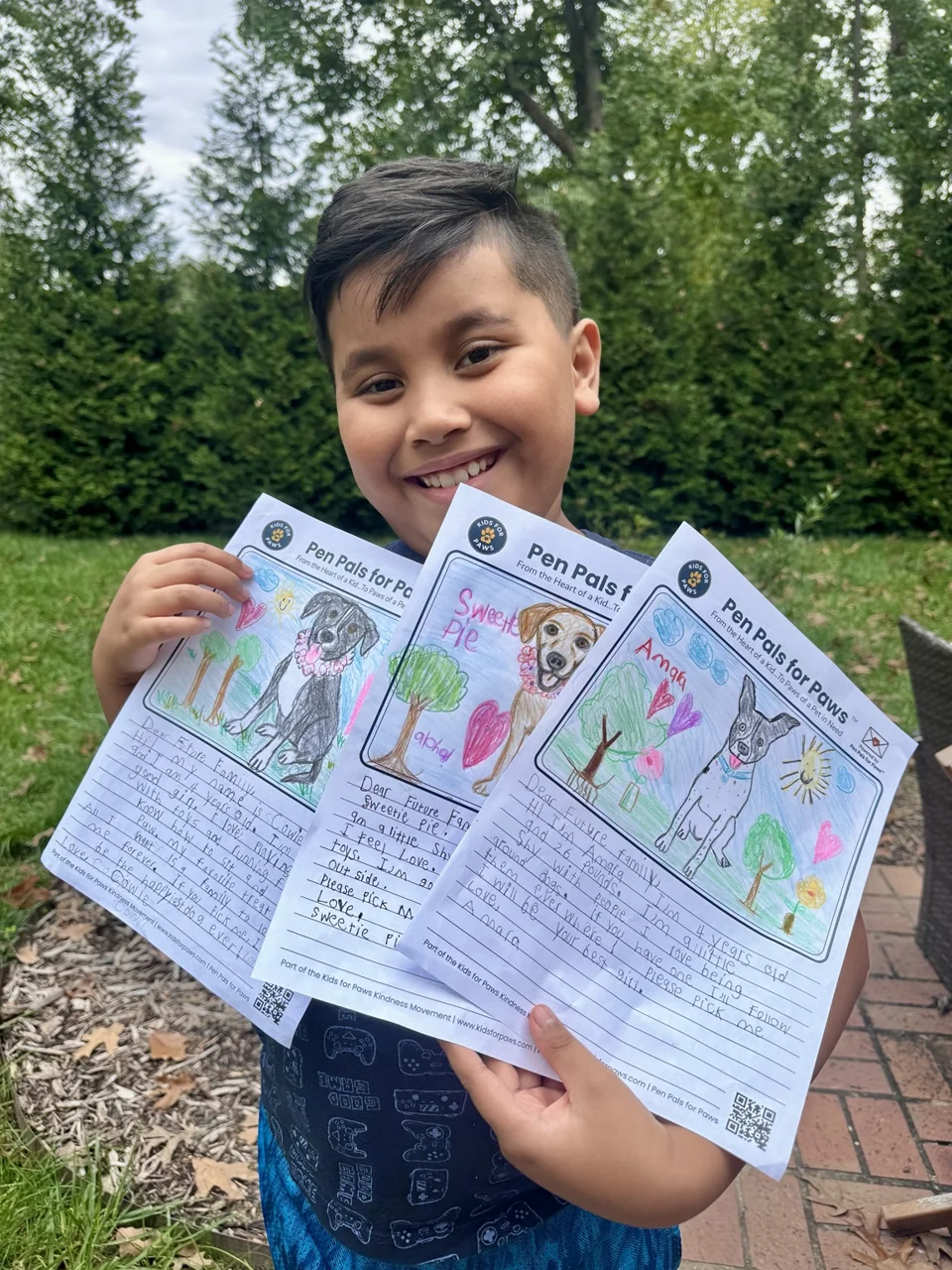
We are the bridge
At Kids for Paws, children turn the things they already love—writing, drawing, speaking, and making—into something meaningful for a shelter or rescue animal.
They do not need perfect handwriting, a big audience, or a whole classroom behind them.
Start with one Paw.
A first step that feels like them
Choose a way in. There is no need to do them all.
Your first write mission
Choose one Paw and write a few true, hopeful words in the animal’s voice.
Start with: Paper, something to draw with, and a grown-up.
Start with Pen Pals for PawsWrite. Create. Speak. Serve.
These ideas begin with animals and needs. For anything you plan to donate, submit, or share, have a grown-up confirm what the organization can use.
Write 01–03
Turn verified shelter details into a hopeful letter in the animal’s voice to a future family.
Try this: Begin “Dear Future Family…” Share one true detail, then close with “Please pick me. Love, [animal’s name].”
Help a fact-loving child turn an official animal profile into a clear, easy-to-read introduction.
Try this: Use one animal, two verified details, and one current official link.
Write a short invitation around one shelter-confirmed need so grown-ups know exactly how to help.
Try this: Check the current wish list, then begin: “Our chosen shelter is asking for…”
Create 04–06
Draw one Paw in a way that helps someone pause, notice, and remember them.
Try this: Use an approved photo. Add the animal’s name and one recognizable detail.
Combine an approved image, a few verified facts, and the official listing into a useful adoption-support poster.
Try this: Make the animal’s name, main message, and “learn more” link easy to read.
Make a handmade comfort item only after the shelter confirms what is safe and useful.
Try this: Ask for its pattern, approved materials, and quantity limit before making anything.
Speak 07–09
Record a brief, audio-only story in an animal’s voice using shelter-provided facts. No face on camera is needed.
Try this: Start “Dear Future Family…” and let one true personality detail shine.
Share one animal or shelter need with a class, homeschool co-op, Scout group, or another adult-led group.
Try this: Say: “Here is one animal we can help—and one useful way to do it.”
Let a child choose an official shelter story worth passing along while a grown-up handles the actual sharing.
Try this: Check the current listing, keep the official link intact, and add no guessed claims.
Serve 10–12
Focus a family or group drive on one item the shelter has confirmed it needs.
Try this: Confirm the brand or size, collection point, storage, and drop-off plan first.
Kids can count, check, label, and sort an approved collection—a meaningful role for quiet helpers, too.
Try this: Make a simple handover list. Adults handle lifting, transport, and delivery.
Bring a few children together around one verified animal or one shelter-requested need.
Try this: Choose writer, artist, speaker, and organizer roles—then reflect on what the group learned.
Words for a Paw. Purpose for a child.
A name. A true detail. A hopeful hello. That is enough for a first draft.
Help them write their first letterDear Future Family,
Please pick me.
Our Kids for Paws signature—a starting point, not an individual animal profile.
Love, [animal’s name].
At the kitchen table
A shelter visit is not required. A child can begin with simple materials and a grown-up nearby.
Choose an official animal listing, learn one or two verified details, then write, draw, or record in the way that feels most comfortable.
In a classroom, co-op, or troop
What if this week’s lesson had an animal behind it?
One verified shelter need can connect learning, empathy, and useful action for a classroom, co-op, Scout group, or youth group.
Choose one action, review the work, and reflect on what was needed and learned. Schools and group leaders decide whether a project qualifies for credit, service hours, or badges, so ask before starting.
Explore schools & group missionsToo young to volunteer on-site?
Sometimes. Each organization sets its own age, training, and supervision rules, so families should ask the shelter or rescue directly before planning a visit.
When on-site volunteering is not an option, adult-guided letters, art, voice, and requested service projects still offer a meaningful way to help.
Big hearts. Thoughtful help.
The child creates. The grown-up coordinates.
Helping should respect the child, the animal, and the people doing the daily care.
Use current shelter or rescue information. Do not invent an animal’s history, needs, availability, or suitability for a family.
Leave surnames, school details, home addresses, and direct contact information off public work.
A grown-up reviews the work, manages contact, and confirms permission before anything is submitted or shared.
Confirm requests, photo permissions, and intended use. Do not send work or supplies the organization has not agreed to receive.
Shelters and rescues manage animal care, current information, adoption decisions, and whether submissions are used.
A few things grown-ups ask
Children can help through adult-guided letters, artwork, short voice recordings, presentations, verified sharing, and projects based on a shelter’s current requests. Start with one animal or one clear need, check the facts, and let a grown-up coordinate the next step.
Yes. Pen Pals for Paws, Art for Paws, and Voice for Paws can begin at home with adult guidance. A shelter visit is not required. Public sharing, submissions, and contact with animal organizations stay with the grown-up.
A younger child might draw an animal, dictate a short letter, or help count safe, approved donation items. Choose a task that fits the child’s abilities, attention, and comfort. On-site volunteering has separate rules set by each organization.
It is written in an animal’s voice to their future family—not a pen-pal exchange between children. Kids learn the animal’s verified story, draw their portrait, and write a Dear Future Family letter. A grown-up handles review and possible sharing.
No. Voice for Paws can use an audio recording without showing a child’s face. A grown-up reviews the recording, follows the current program instructions, and confirms permission before anything is shared publicly.
Ask the school, teacher, or youth leader before starting. They decide what qualifies and what approval or records are needed. Kids for Paws participation does not automatically award credit, hours, or badges.
No. You can begin with the free Pen Pals for Paws Family Kit and materials you already have, such as paper and crayons. Choose a writing, drawing, or voice activity when buying items is not part of your plan.
One Paw. One mission. One meaningful act.
Prepared for Kids for Paws. Program steps link to our current activity pages. The projects above are ideas, not promises that every shelter accepts every item or submission. Check directly with your chosen organization. External resources are informational and do not indicate a partnership.
Fairfax County volunteer requirements · Fairfax County youth project guidance · Fairfax County donation guidance · PAWS volunteer information